Colatura di alici: what it is, how to use it and how to choose it
Colatura di alici is the liquid that anchovies release as they mature under salt. What it really is, how to use it in the kitchen and what the Cetara designation says.
In brief
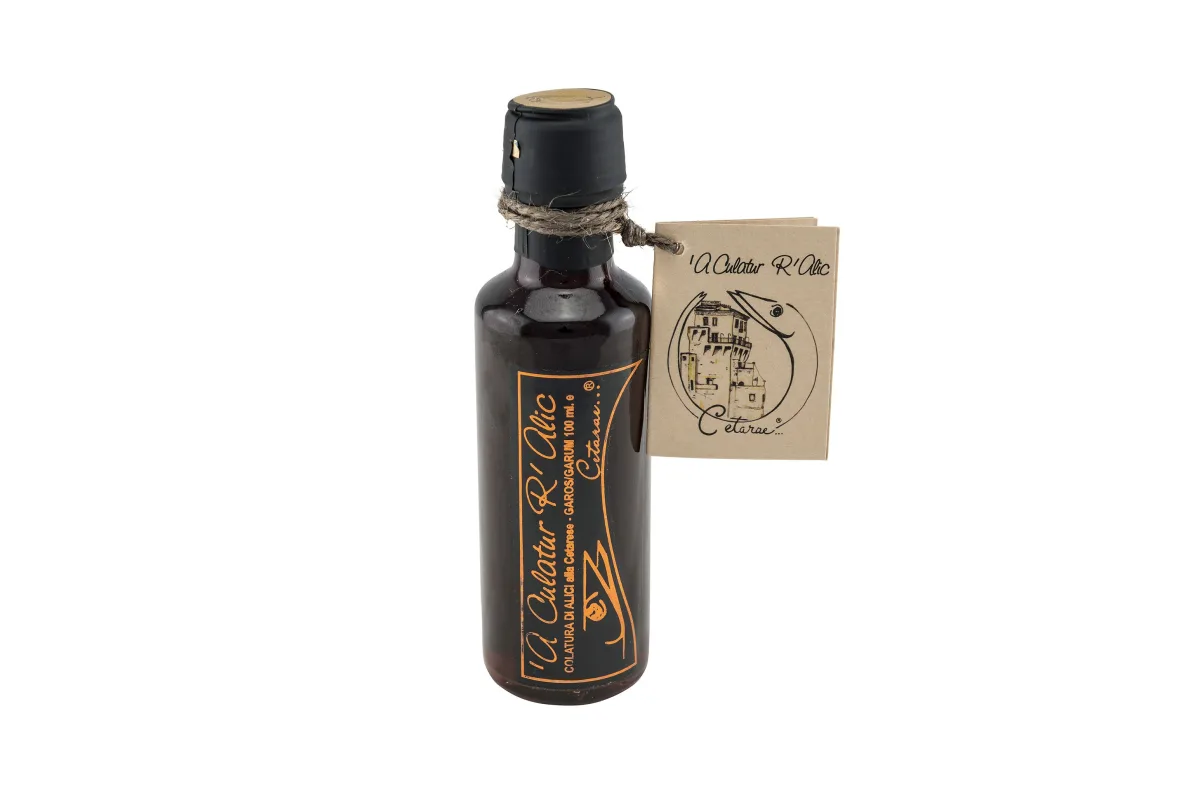
Colatura di alici is the amber liquid obtained from anchovies left to mature under salt. It is very savoury: it is used as a seasoning, off the heat, and in pasta it takes the place of salt. A cook from Cetara, quoted by a food publication, suggests about 5 g per 100 g of pasta, to be adjusted by tasting.
What colatura di alici is
It is a liquid obtained from the maturation of anchovies (Engraulis encrasicolus) under salt. It is amber in colour, tending to brown, with an intense smell reminiscent of salted anchovies and a strong, savoury, umami flavour. It is not a sauce and is not used by the spoonful: it is a seasoning to be measured out.
The name “Colatura di Alici di Cetara” is a protected designation of origin, PDO (DOP), registered with Implementing Regulation (EU) 2020/1529 of 14 October 2020. To carry that name the specification provides, among other things, for:
- anchovies caught in the sea off the province of Salerno and processed in the municipalities of the province of Salerno;
- anchovies beheaded and gutted by hand, layered with sea salt in wooden containers (terzigni or barrels);
- a maturation of nine months;
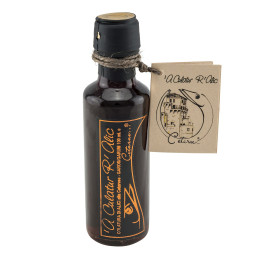
- sale to the consumer in clear glass, from 50 to 1000 ml.
The PDO area is therefore the province of Salerno, not just the town of Cetara. Not all the colatura on the market is PDO: if this guarantee matters to you, look on the label for the designation and the European symbol. On the product page you will find the information declared by the producer; what is written above describes colatura in general, and for the product on sale the product page and the label prevail. Colatura contains fish (anchovies).
And the garum of the Romans?
Garum was a fermented fish sauce of Roman antiquity, and colatura is often described as its modern heir. This is a widespread hypothesis, but no official document asserts it: according to a 2018 archaeological and chemical study, garum was a liquid obtained by fermenting whole small fish with salt, herbs and spices (the exact process remains partly unknown), while the colatura of Cetara uses gutted anchovies and only sea salt. We are talking about a hypothesis of kinship, not of identity.
How to use it in the kitchen
Colatura is already salted: it is used sparingly and, usually, at the end of preparation, away from the heat.
- How much: for pasta, a cook from Cetara, quoted by a food publication, suggests about 5 g per 100 g of pasta: for two people (200 g) that is about 10 g. This is a practice, not a rule: start with less and taste.
- Salt: not needed in the cooking water, or very little.
- When: it is added to the drained pasta, off the heat, as in the recipe of a food publication.
Spaghetti with colatura
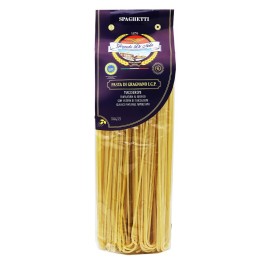
In Cetara, according to the PDO specification, colatura was used to dress spaghetti or linguine at the Christmas Eve dinner. The basic version:
- Cook the spaghetti (or the linguine) in unsalted water.
- In a bowl, or in a pan off the heat, mix extra virgin olive oil, a crushed clove of garlic (to be removed), chopped parsley, chilli if you like it, and the colatura.
- Drain the pasta al dente, keeping a ladleful of the cooking water.
- Pour the pasta into the dressing, add a little cooking water and stir until you have a light cream. Serve immediately.
Other uses
Other uses, such as seasoning boiled vegetables or fish dishes in place of salt, are kitchen habits with no codified quantities: start with very little and taste.
Frequently asked questions
Does it need to be kept in the refrigerator? How long does it last once opened?
We have not found a regulation or an indication in the specification. Always follow what the producer writes on the label and close the bottle well after use.
Is it dangerous because of histamine?
For fish sauces produced by fermentation the European Union sets a histamine limit of 400 mg/kg (EU Reg. 1019/2013), and we have not verified whether colatura falls within that category. If you are sensitive to histamine, or pregnant, ask your doctor.
What does it go with?
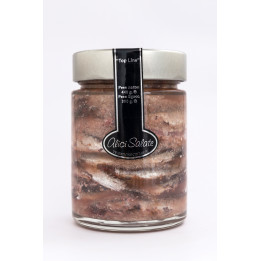
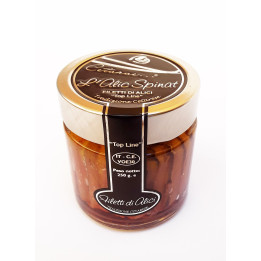
With pasta, above all; with fish and vegetables. If you love the taste of the sea, keep the anchovies of the selection in your pantry as well.
How to choose it
Check the label: designation (PDO or not), size, place of production and producer. On the page for the colatura di alici of the selection you will find the size and the producer's information; for alternatives, see the Colatura di alici category.