Fagioli di Controne and Cicerale chickpeas: how to cook them
What the Controne bean and the Cicerale chickpea are, why dried pulses must be soaked and thoroughly cooked, and how to store them.
In brief
The Controne bean and the Cicerale chickpea are pulses from Campania, in the province of Salerno, both traditional agri-food products (PAT) and Slow Food Presidia; they are neither PDO (DOP) nor PGI (IGP). Dried beans are never eaten raw or undercooked: they need soaking and full cooking.
What they are
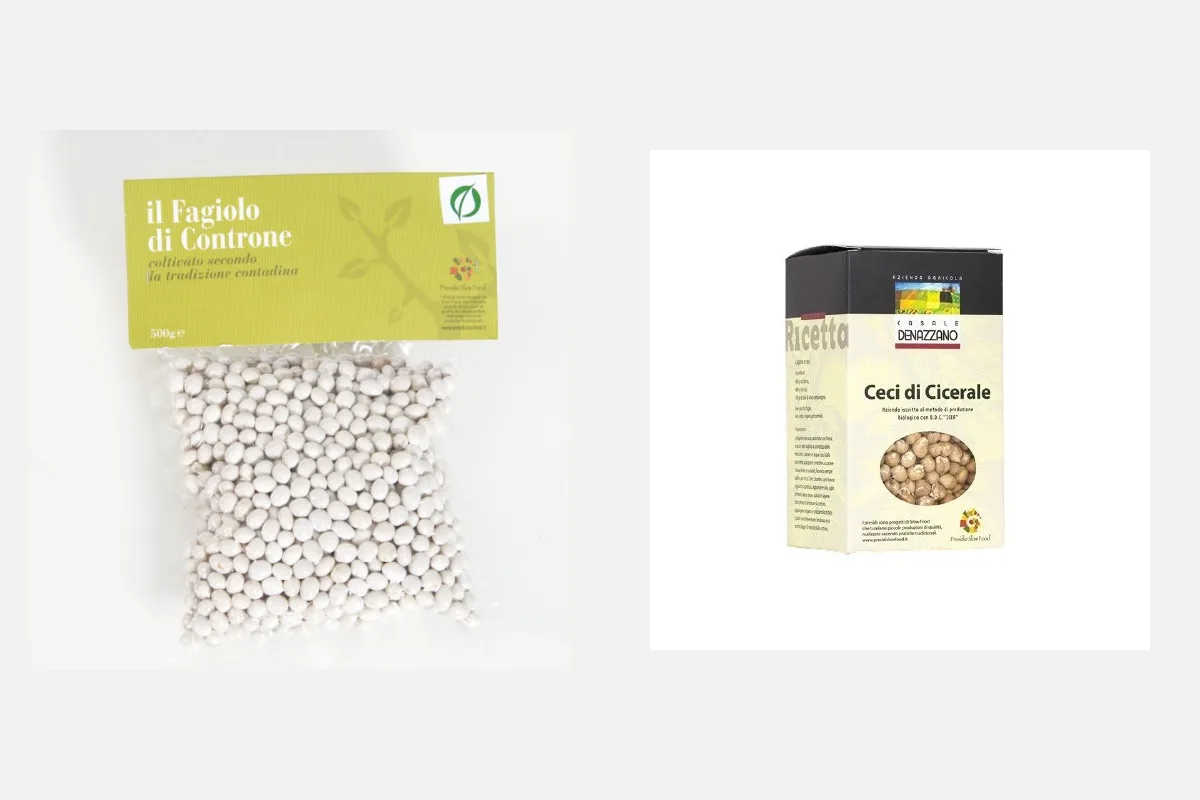
The fagiolo di Controne (Controne bean) is grown at Controne, in the province of Salerno, at the foot of the Alburni. It is sown in July and harvested from late October to mid-November; dried, it is available all year round. The best-known ecotype has a thin skin and cooks in noticeably shorter times than the common bean (according to Slow Food).
The cece di Cicerale (Cicerale chickpea) comes from Cicerale, on the first hills of the Cilento, also in the Salerno area. It is harvested in July. The seed is small and round, slightly more golden than an ordinary chickpea; it swells a great deal in cooking.
Both are in the national list of traditional agri-food products (PAT) and are Slow Food Presidia: they have established cultivation methods, but not a European designation (PDO or PGI). What PAT means is explained in how to read the label.
Soaking and cooking: not only a question of taste
Beans contain a lectin (phytohaemagglutinin) which, if the beans are undercooked, can cause intestinal upset. The European Food Safety Authority (EFSA) recalled in 2026 that soaking and boiling deactivate it effectively. For dried beans:
- soak in plenty of cold water for at least 12 hours (indication of the Finnish food authority);
- drain and rinse, then cook in fresh water, bringing it to the boil: at least 30 minutes of boiling after soaking (indication of the Finnish authority);
- avoid cooking them slowly at a low temperature when they are raw.
There are no official Italian times: the Controne bean cooks faster than the common bean, so check the tenderness by tasting.
Cooking, step by step
- Soak for at least 12 hours in cold water, then drain and rinse.
- Cook in fresh water (about three times the volume of the pulses), salted or with vegetable stock.
- A pinch of bicarbonate only if the water is very hard and rich in limescale.
- Vinegar or lemon only at the end of cooking: added earlier, they would toughen the skin.
According to a consumer centre, chickpeas can take up to about two hours of cooking; for Cicerale chickpeas there are no specific soaking indications.
How to bring them to the table
For the Controne bean, Slow Food mentions: “al tozzetto” (a fresella with oil and boiled beans), with escarole, in pasta e fagioli and as a dressing for làgane; the pairing with oil from local cultivars is considered excellent. For a simple dish: cooked pulses, raw extra virgin olive oil, black pepper. With short pasta you can make a soup, for example with the tubettoni; you will find all the shapes in the Pasta category. For the oil, see how to choose and store it.
How to store them
Dried pulses are kept in a closed container, in the dark and dry, for up to two years (indication of the Centro Tutela Consumatori of Bolzano); after opening, and for pre-cooked products, what the producer writes on the label applies.
In the selection
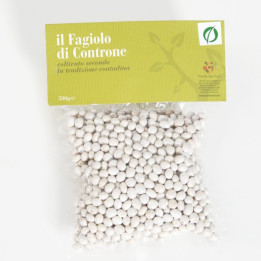
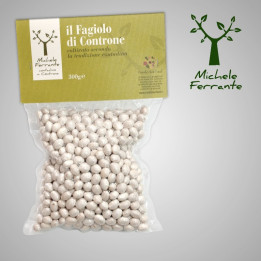
The Controne beans are available in 300 g and 500 g, also pre-cooked in a glass jar; the Cicerale chickpeas in a 500 g pack. The information declared by the producer is on the product page.