Extra virgin olive oil: how to read it, taste it and store it
What distinguishes extra virgin from virgin, what “cold first press” means and how to store oil at home, even in a 5-litre tin.
In brief
Extra virgin olive oil has a free acidity of no more than 0.8% and, on tasting, no defects: this is checked by a panel of tasters. What spoils it is light and heat. A large tin should be decanted into smaller, darker containers, and oil that has been opened is used within one to three months.
Extra virgin, virgin, olive oil
Since 2022 the oil categories have been defined by Delegated Regulation (EU) 2022/2104. Extra virgin and virgin oils are obtained from olives by mechanical processes only; the difference lies in quality.
- Extra virgin: maximum free acidity 0.8%; on tasting, no defects and a perceptible fruitiness. The judgement is made by a recognised tasting panel, not only by a chemical analysis.
- Virgin: acidity up to 2%; slight defects are tolerated on tasting.
- Olive oil: a blend of refined oil and virgin oil, with a maximum acidity of 1%.
Please note: acidity alone does not tell you whether the oil is good. If it is stated on the label, the regulation requires it to be accompanied, in the same field of vision, by the maximum values for peroxides, waxes and UV absorbance.
What you read on the label
- Origin: for extra virgin and virgin oils the origin stated must correspond to the area where the olives were harvested and where the mill is located.
- Harvest season or date: it can be written only if all the oil in the container comes from that harvest.
- “First cold press”: reserved for oils obtained at below 27 °C with the first mechanical pressing and the traditional system of hydraulic presses. For oil obtained by centrifugation or percolation, again below 27 °C, the correct wording is “cold extracted”.
- “Store away from light and heat”: this is the phrase required by the regulation, and it should be taken seriously.
Fruity, bitter, pungent
These are the three words of tasting. They may appear on the label only if confirmed by a panel, and with a precise scale: light, medium or intense. A “very intense” fruitiness, for example, is not a wording provided for by the regulation. An oil is called balanced when bitterness and pungency do not exceed the fruitiness by more than two points.
Campanian oils with a designation
In the European register there are five Campanian PDO (DOP) oils: Cilento, Colline Salernitane, Penisola Sorrentina, Irpinia - Colline dell'Ufita and Terre Aurunche. There is also the PGI (IGP) Olio Campania. Other wordings you may come across, such as “Sannio Caudino Telesino” or “Pisciottana”, are traditional agri-food products (PAT) and not PDO: they are not the same thing.
For the other wordings found on packaging, see how to read the label.
How to store it at home
According to the International Olive Council, the main threat to oil is light and the second is heat; air also speeds up oxidation, so it is best to leave little space in the container.
- Where: a dark place, away from heat sources; the range indicated for the supply chain is 13-25 °C.
- Container: dark glass, ceramic or stainless steel, tightly closed and with little air space; iron is to be avoided.
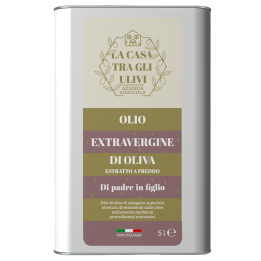
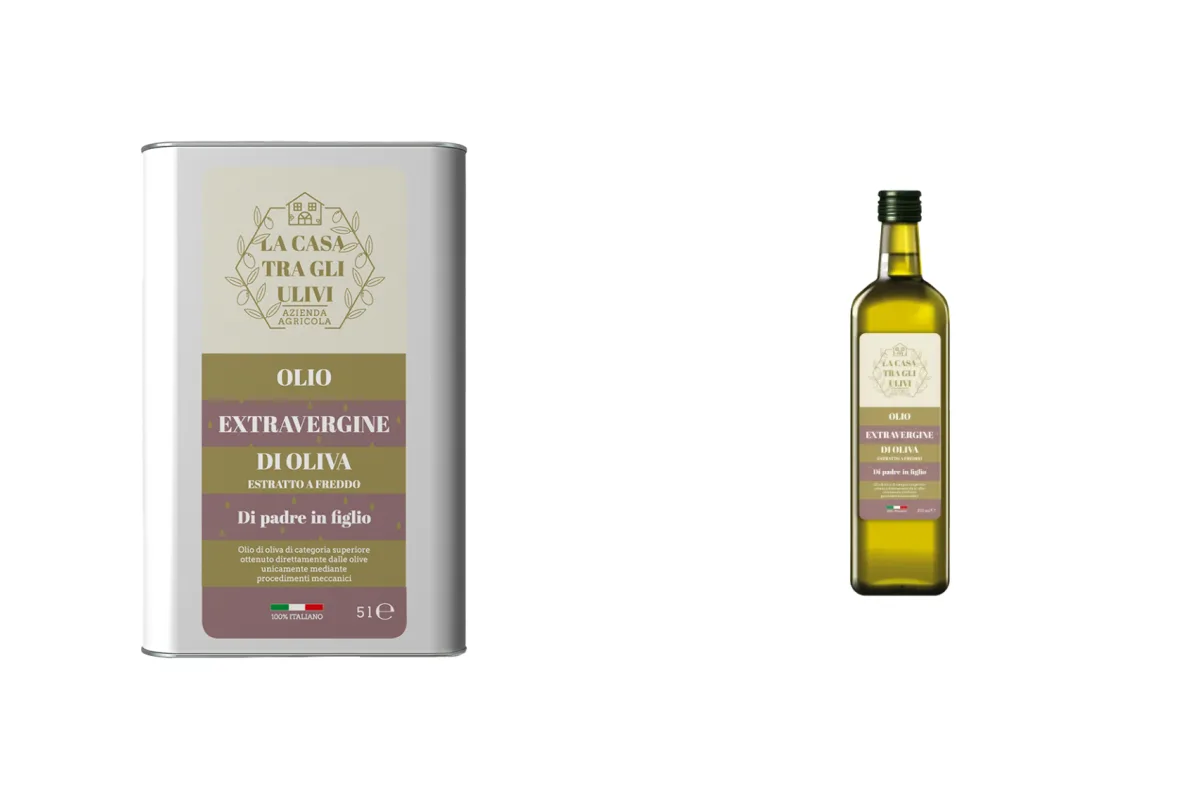
- 3-5 litre tin: the advice is to decant into smaller, darker containers, filling them as much as possible, and to keep the tin tightly closed. The oil in an open container is used within one to three months.
- Quantity: it is not worth buying more oil than you use in a year: in oil, time does not improve, it worsens.
- Refrigerator: permitted (about 4 °C) and reduces oxidation; part of the fat may solidify, reversibly.
In the selection
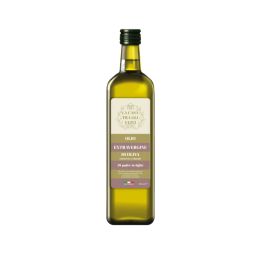
You will find Campanian extra virgin olive oil in a bottle and in a 5-litre tin. The information declared by the producer (origin, vintage, characteristics) is on the product page; if you need confirmation of a detail, write to us. For everything else in the pantry, go to the Oil and condiments category.