Semolina pasta: the label, bronze dies and how to cook it
What “durum wheat semolina pasta” means, what the PGI Pasta di Gragnano is, what the research says about the bronze die and how pasta is cooked.
In brief
Dried semolina pasta is made, by law, only from durum wheat semolina and water. “Pasta di Gragnano” is a PGI (IGP) with precise rules on area and die. The bronze die makes the surface rougher; for cooking, a widespread practice among cooks is 1 litre of water for every 100 g of pasta and about 10 g of salt per litre (others use less).
What the law says
Presidential Decree (DPR) 187/2001 defines durum wheat semolina pasta: it is obtained by extrusion through dies, lamination and drying of a dough prepared only with durum wheat semolina and water, with limits on moisture (maximum 12.5%), ash (maximum 0.90%) and protein (minimum 10.5%), referring to dry matter. Pastas with other ingredients are “durum wheat semolina pasta” plus an indication of the ingredient.
The PGI “Pasta di Gragnano”
Since 2013 “Pasta di Gragnano” has been a protected geographical indication. According to the specification:
- it is produced and packaged only in the municipality of Gragnano (Naples);
- the dough is made of durum wheat semolina and water from the local aquifer;
- the dies are exclusively bronze;
- drying lasts from 4 to 60 hours, at a temperature between 40 and 85 °C, depending on the shape;
- the finished pasta is straw yellow, with a glassy fracture, a visible roughness and good resistance to cooking.
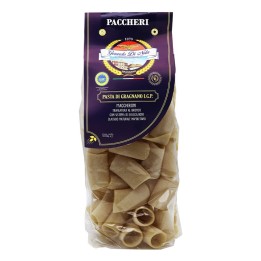
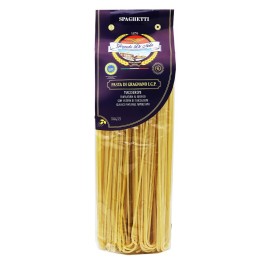
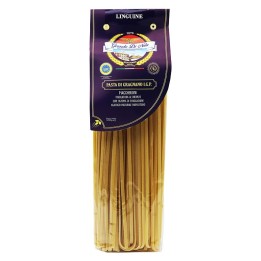
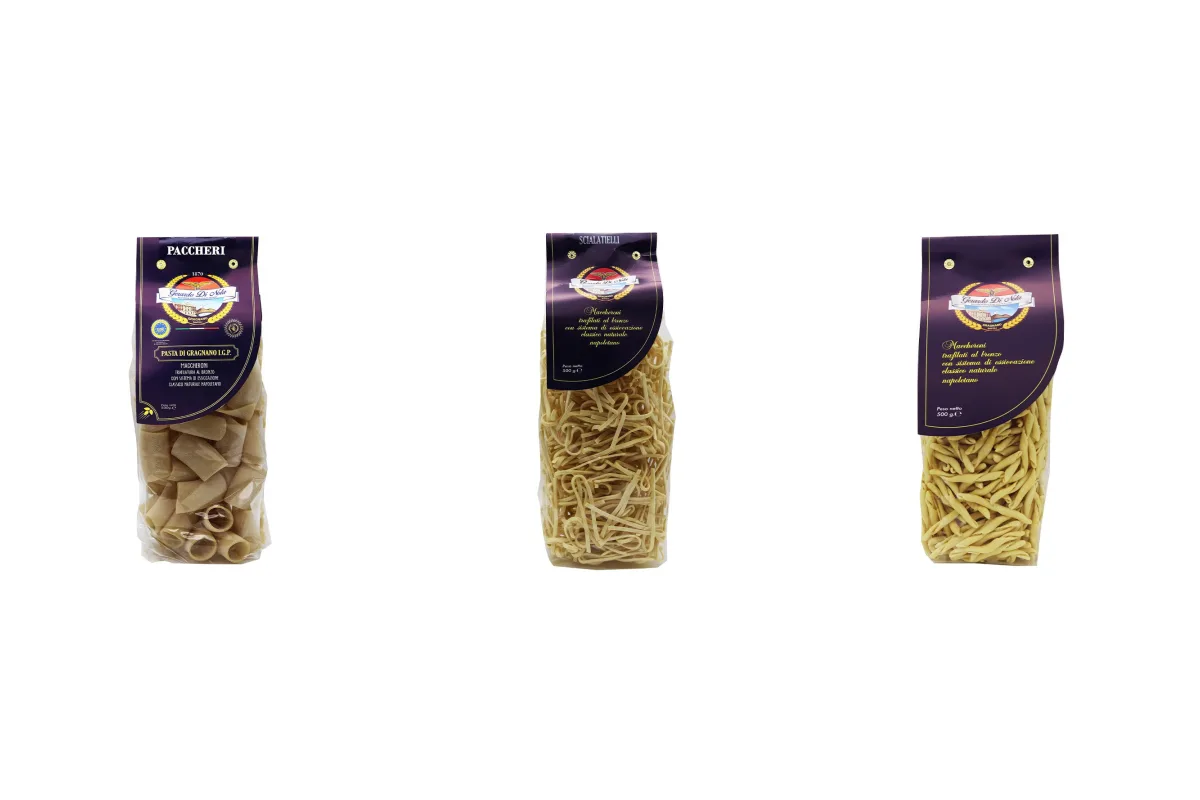
On the label, PGI pasta carries “Pasta di Gragnano”, “Indicazione geografica protetta” (or “IGP”) and the address of the company. Not all pasta produced in Gragnano is PGI, and pasta made elsewhere is not. For each shape, what is written on the pack is what counts.
Bronze or Teflon dies
Bronze gives the pasta a rougher surface than Teflon: in a laboratory study on spaghetti obtained with five materials, bronze proved the roughest and Teflon the smoothest. The Gragnano specification maintains that the roughness lets cooked pasta hold the sauce better; the research read did not measure this effect. That pasta holds more sauce is maintained by many cooks and by the Gragnano specification, but according to the authors of the study it remains to be demonstrated by experiments. “Teflon” indicates a die material, not a pasta of lower quality.
How to cook it
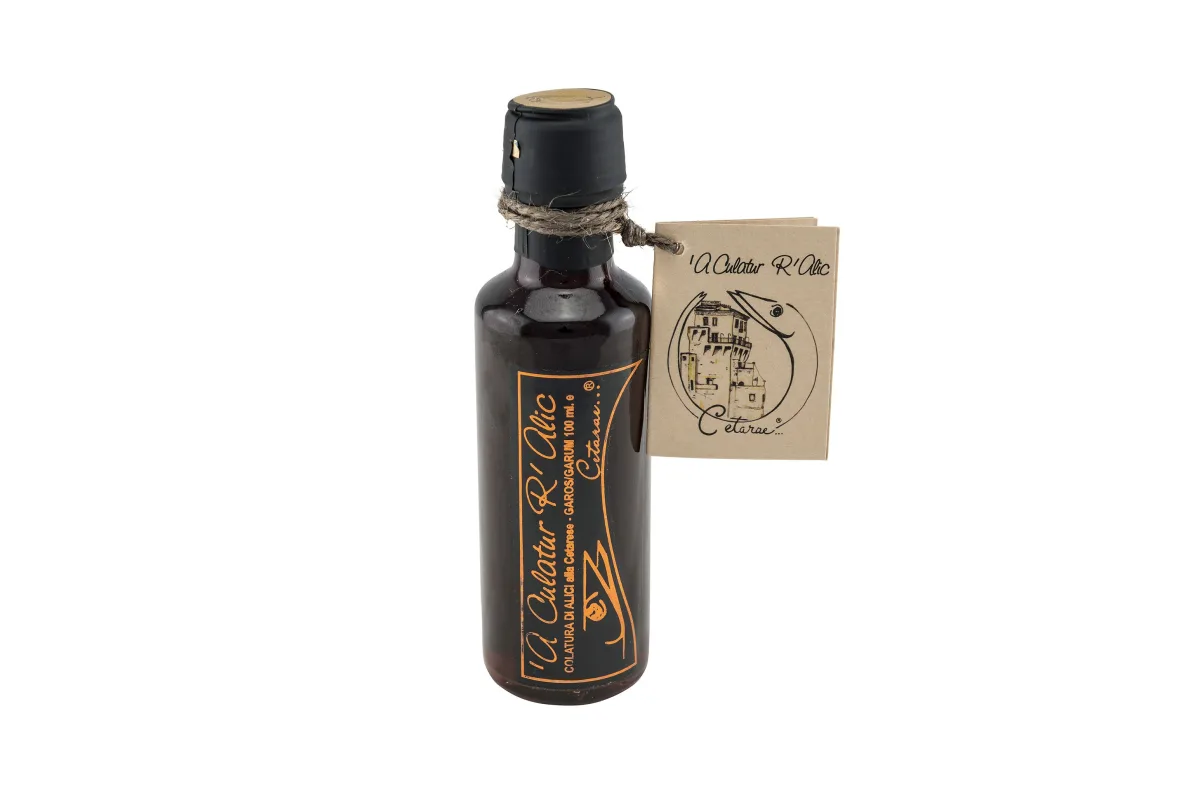
For the cooking times, what the producer writes on the pack applies. For the water there is no regulation, but there is a practice widespread among cooks (for example Uliassi, in the Michelin Guide): at least 1 litre for every 100 g of pasta and about 10 g of salt per litre (1% salted water). Other cooks use from 5 to 12 g of salt per litre; coarse or fine salt makes no difference. Salt does not lengthen the time the water takes to boil to any appreciable extent. To dress the pasta with colatura di alici, on the other hand, the water is salted little or not at all.
Some Campanian shapes
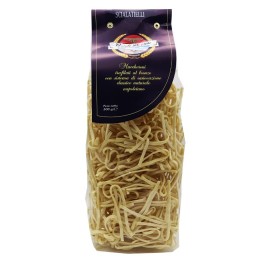
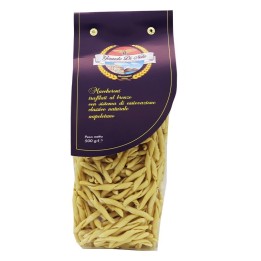
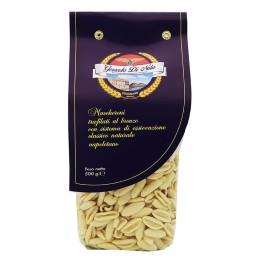
The national list of traditional agri-food products (PAT) of Campania includes the fusillo avellinese, the scialatiello and the cavatelli. Cavatelli and some fusilli also appear in the lists of Basilicata, Molise and Puglia: they are not “only Campanian”. For the scialatiello, an interview by MedEatResearch (Università Suor Orsola Benincasa, 2024) presents the Amalfi cook Enrico Cosentino as its inventor. For the paccheri and for ziti there is no entry in the PAT list.
Gluten-free pasta
“Gluten-free” may be written only if the gluten in the food sold to the consumer is at most 20 mg/kg (EU Reg. 828/2014). Gluten-free pasta is not made with durum wheat semolina: for this reason it is not “semolina” pasta and cannot be PGI. Cook it according to the label. Semolina pasta contains gluten.
In the selection
The pasta comes in four families: long (spaghetti, linguine), short, special and gluten-free. For a pulse soup, see beans and chickpeas.